
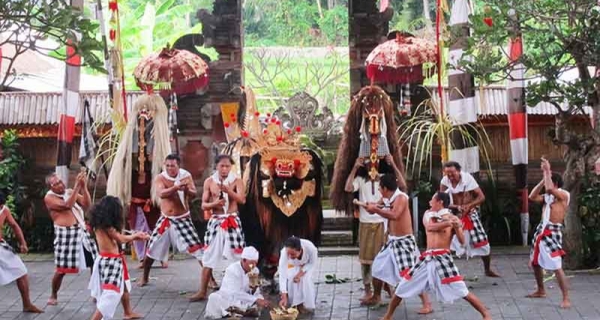
What is Barong and Keris Dance
Barong and Keris Dance in Bali is one of Bali’s most iconic cultural performances and remains one of the island’s most treasured traditional arts. Almost every visitor, both domestic and international, who travels to Bali takes the opportunity to experience this captivating performance. More than just an entertaining show, the Barong and Keris Dance showcases the beauty of traditional Balinese choreography, elaborate costumes, and the enchanting sounds of the gamelan orchestra. At the same time, it conveys a profound philosophical message about the eternal struggle between good and evil. In Balinese Hindu belief, Barong symbolizes the force of goodness and protection, while Rangda represents evil and destructive power, reflecting the constant balance that exists in human life.
As an important part of Bali’s cultural heritage, the Barong and Keris Dance is performed at several well-known cultural venues across the island, including Sahadewa Barong Dance and Sila Budaya in Batubulan, Gianyar, Uma Dewi Stage in Kesiman, Denpasar, Sari Wisata Budaya in Pemogan, Denpasar, as well as other traditional performance venues throughout Bali. These performances have become one of the island’s most popular cultural attractions, offering visitors the opportunity to gain a deeper understanding of Balinese traditions, spirituality, and performing arts. Through graceful dance movements, live gamelan music, and the dramatic keris scenes, audiences are invited to witness a sacred story that has been passed down from generation to generation.
In this article, you will learn about the history of the Barong and Keris Dance, the symbolic meaning behind its performance, the storyline it portrays, and the reasons why this remarkable traditional Balinese dance remains one of the must-see cultural experiences for anyone visiting the Island of the Gods.
Best Places to Watch Barong and Keris Dance in Bali
In this article, you will find a comprehensive guide to the most famous Barong and Keris Dance performance venues in Bali. These cultural attractions are among the must-visit destinations for both domestic and international travelers seeking to experience Bali’s rich artistic heritage.
1. Sahadewa Barong Dance
| Location | Jalan SMKI No. 25, Desa Batubulan, Kecamatan Sukawati, Kabupaten Gianyar, Bali 80582, |
| Time of Show | 09:30 ~ 10:30 (approximately 1 hour) it is recommended to come at 09:00 |
| Facility | a performance stage with a magnificent Balinese gate as the backdrop, waiting room, gamelan musicians, and standard facilities such as toilets and a souvenir shop |
| Suitable For | Families, Couples & Solo Travelers |
| Ticket Price | Rp 150.000 ( Adult), Rp 75.000 (child 5~10 yo) |
2. Sila Budaya
| Location | Jalan Raya Batubulan No. 63C, Batubulan, Kecamatan Sukawati, Kabupaten Gianyar, Bali. |
| Time of Show | 09:30 ~ 10:30 (approximately 1 hour) it is recommended to come at 09:00 |
| Facility | a performance stage with a magnificent Balinese gate as the backdrop, waiting room, gamelan musicians, and standard facilities such as toilets and a souvenir shop |
| Suitable For | Families, Couples & Solo Travelers |
| Ticket Price | Rp 150.000 ( Adult), Rp 75.000 (child 5~10 yo) |
3. Uma Dewi Kesiman
| Location | Jalan Waribang No. 21, Kesiman Petilan, Kecamatan Denpasar Timur, Kota Denpasar, Bali. |
| Time of Show | 09:30 ~ 10:30 (approximately 1 hour) it is recommended to come at 09:00 |
| Facility | a performance stage with a magnificent Balinese gate as the backdrop, waiting room, gamelan musicians, and standard facilities such as toilets and a souvenir shop |
| Suitable For | Families, Couples & Solo Travelers |
| Ticket Price | Rp 150.000 ( Adult), Rp 75.000 (child 5~10 yo) |
4. Sari Wisata Bali
| Location | Jl. Griya Anyar no. 25B, Pemogan, Denpasar Selatan, Bali 80221 |
| Time of Show | 09:30 ~ 10:30 (approximately 1 hour) it is recommended to come at 09:00 |
| Facility | a performance stage with a magnificent Balinese gate as the backdrop, waiting room, gamelan musicians, and standard facilities such as toilets and a souvenir shop |
| Suitable For | Families, Couples & Solo Travelers |
| Ticket Price | Rp 150.000 ( Adult), Rp 75.000 (child 5~10 yo) |
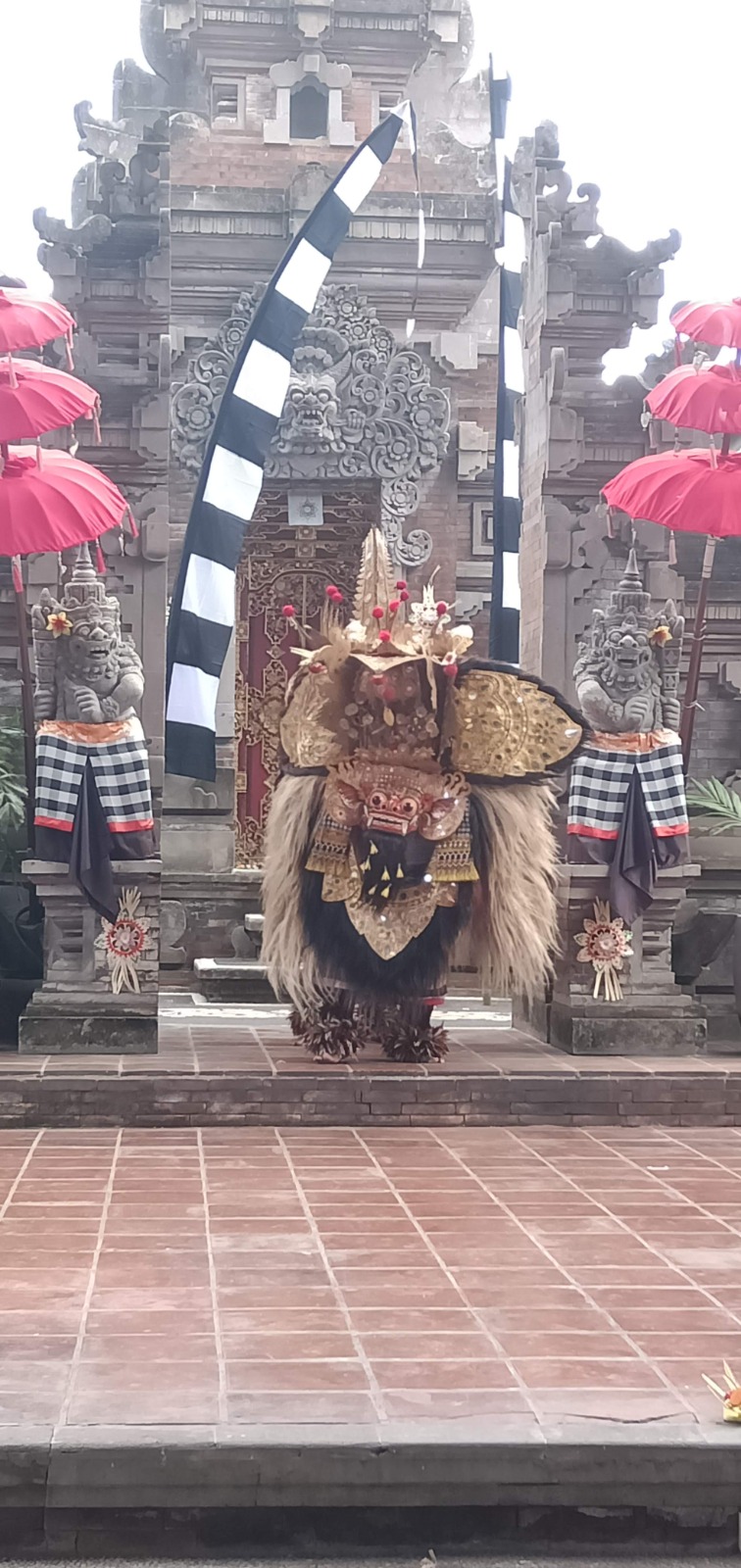
Barong Dance
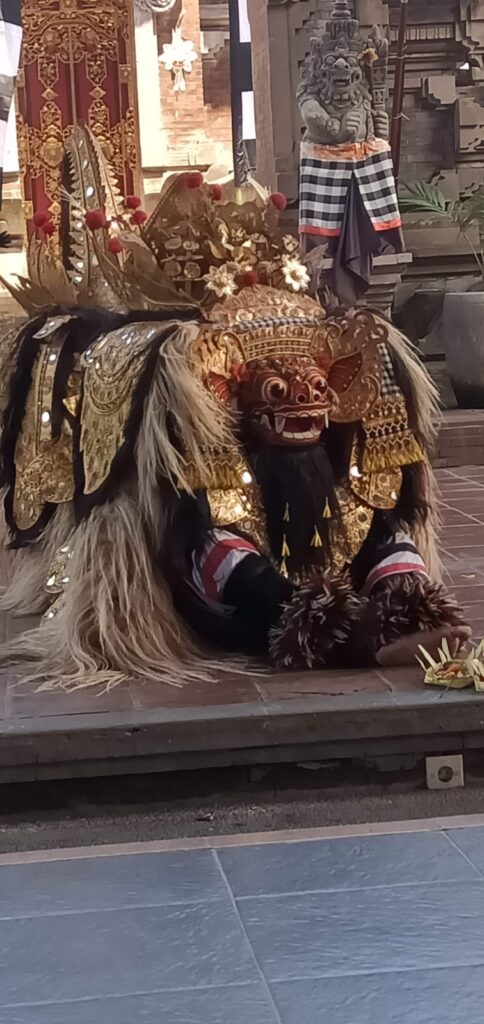
Barong and Keris Dance Performance Storyline
The Barong and Keris Dance performance is typically divided into several acts, each depicting the timeless battle between good and evil. Barong represents the forces of goodness and protection, while Rangda symbolizes evil and destructive power. Through this captivating performance, audiences witness the ongoing struggle to maintain harmony and balance, a fundamental philosophy in Balinese culture.
1.The Opening Performance: Barong and the Monkey
The performance begins with the appearance of Barong, who dances alongside a playful monkey. This opening scene is lighthearted and entertaining, creating an enjoyable atmosphere while introducing Barong as a powerful and benevolent guardian endowed with mystical powers. It serves as an engaging introduction to the story before the dramatic conflict between good and evil unfolds.
2. The Appearance of Rangda’s Followers
Following the opening scene, the story begins to unfold as the conflict emerges. Rangda’s followers, representing the forces of evil, make their entrance and begin to disrupt peace and harmony. This dramatic scene symbolizes the rise of dark forces that threaten the balance between good and evil, setting the stage for the epic confrontation that follows.
3. The Story of Dewi Kunti and Sadewa
In many versions of the performance, the story continues with the tale of Dewi Kunti, who is compelled to surrender her son, Sadewa, to Rangda. Under the influence of dark forces, Dewi Kunti reluctantly orders Sadewa to be sacrificed. This emotional scene highlights the struggle between human vulnerability and the overwhelming power of evil.
4. Sadewa Is Bound in the Cemetery
Sadewa is then taken to a sacred cemetery, where he is tied to a tree as an offering to Rangda. As Rangda prepares to kill him, Sadewa receives divine protection. In some versions of the story, Lord Shiva descends from heaven and grants Sadewa the gift of immortality, making him invulnerable to Rangda’s dark magic.
5. Rangda Fails to Kill Sadewa
Unable to overcome the divine protection surrounding Sadewa, Rangda fails to take his life. Realizing the power of holiness, Rangda asks Sadewa to purify her and release her from the curse that binds her. This scene symbolizes the triumph of sacred power over evil and demonstrates that purity and righteousness ultimately prevail.
6. The Battle Between Barong and Rangda
The performance reaches its climax as Barong and Rangda confront each other in an epic battle. Barong represents goodness, protection, and positive spiritual energy, while Rangda embodies evil and destructive forces. Despite their fierce struggle, neither side achieves complete victory. According to Balinese philosophy, good and evil will always coexist, and maintaining harmony between the two is essential for the balance of life.
7. The Keris Trance Scene
One of the most dramatic moments of the performance is the famous Keris scene. Barong’s followers charge toward Rangda with their traditional kris daggers. However, under the influence of Rangda’s powerful magic, they fall into a trance and turn their weapons against themselves. Barong then uses his sacred powers to protect them, preventing the daggers from causing any harm. This extraordinary scene is the highlight of the performance and showcases the spiritual and mystical elements of Balinese culture.
8. The Closing Scene
The performance concludes with the restoration of harmony and balance. Barong remains the symbol of protection and virtue, while Rangda reminds the audience that negative forces will always exist and must be kept under control. Through this powerful ending, the Barong and Keris Dance conveys its central message: the importance of maintaining balance between good and evil in everyday life, a core principle of Balinese Hindu philosophy.
History of the Barong and Keris Dance
The Barong and Keris Dance is one of Bali’s most iconic traditional performances, deeply rooted in the island’s religious beliefs, mythology, and spiritual traditions. The dance originated from sacred rituals that symbolize the eternal struggle between Dharma (goodness) and Adharma (evil). In this captivating performance, Barong represents the protective force of good, while Rangda embodies darkness, chaos, and destructive power.
The origins of Barong are closely connected to the Balinese belief in guardian spirits that protect villages and their communities. According to Balinese tradition, Barong is a mythical creature endowed with sacred powers to preserve harmony, maintain the balance of nature, and shield people from evil spirits. The most well-known form is Barong Ket, a lion-like mythical creature distinguished by its elaborate mask, thick fur, and vibrant traditional ornaments.
Over time, the legend of Barong became intertwined with the famous Calon Arang story, which features Rangda, a powerful widow often associated with black magic in Balinese folklore. The combination of these two legends gave rise to the Barong and Keris Dance as it is performed today. The story portrays the struggle between Barong’s followers and the dark influence of Rangda, culminating in the dramatic Keris Trance scene, where dancers demonstrate the triumph of spiritual power over evil.
Originally, the Barong and Keris Dance was performed primarily during traditional ceremonies and Hindu religious rituals. The performance was regarded as sacred, symbolizing protection, purification, and the restoration of spiritual balance. As Bali developed into a world-renowned tourist destination, the dance gradually evolved into a cultural performance for visitors while preserving its religious and philosophical significance. Today, it is regularly performed in cultural centers such as Batubulan, Gianyar, Denpasar, and several other traditional villages across Bali.
Although it is now widely enjoyed as one of Bali’s most popular cultural attractions, the Barong and Keris Dance continues to preserve its authentic traditions. The enchanting Balinese gamelan orchestra, intricate costumes, hand-carved masks, expressive choreography, and timeless storyline all reflect the island’s rich cultural heritage, passed down through generations. More than just an entertaining performance, the Barong and Keris Dance offers visitors a deeper understanding of the Balinese philosophy of life, emphasizing the importance of maintaining harmony and balance between the forces of good and evil.
Why You Should Watch the Barong and Keris Dance in Bali
The Barong and Keris Dance is far more than a traditional Balinese performance—it is a treasured cultural heritage that embodies the island’s spiritual beliefs, rich history, and timeless philosophy of life. Through the legendary battle between Barong, the symbol of goodness and protection, and Rangda, the embodiment of evil and destructive forces, visitors gain a deeper understanding of how the Balinese people value harmony, courage, and the constant balance between positive and negative energies.
Accompanied by the enchanting sounds of the Balinese gamelan orchestra, magnificent traditional costumes, and the dramatic Keris Trance scene, the Barong and Keris Dance offers one of the most unforgettable cultural experiences in Bali. It is a must-see attraction for travelers who wish to discover not only the island’s breathtaking landscapes but also its rich artistic heritage, spiritual traditions, and unique cultural identity.
If you are planning a trip to Bali, don’t miss the opportunity to experience the Barong and Keris Dance in person at Batubulan, Denpasar, or one of the island’s renowned cultural villages. Visit our website, www.gstourbali.com, to explore comprehensive information about performance schedules, the best venues, travel tips, and expert guides to Bali’s cultural attractions.
For a complete cultural experience, we highly recommend our Ubud Tour package, which includes the famous Barong and Keris Dance performance along with visits to some of Ubud’s most iconic attractions. In addition, we offer a wide selection of Bali tour packages, including the Kintamani Tour, Tabanan Tour, Bedugul Tour, East Bali Tour, Tanah Lot Tour, Denpasar City Tour, Gianyar Tour, Besakih Tour, South Bali Tour, and our flexible Car Charter service. Each tour is carefully designed to help you discover Bali’s breathtaking landscapes, rich cultural heritage, and authentic local traditions, ensuring an unforgettable travel experience on the Island of the Gods.